The best AI podcasts in 2026 are Dwarkesh Podcast for research depth, Latent Space for AI engineering, No Priors for the investor view, The TWIML AI Podcast for applied machine learning, Hard Fork for the weekly news cycle, and The Cognitive Revolution for builder interviews.
An AI podcast is a recurring audio or video show that covers artificial intelligence research, products and business through interviews, news analysis or technical explainers. AI podcasts split into four groups: research interviews, engineering shows, investor and founder shows, and daily news briefings. Which one suits you depends on whether you build with models, invest in them, or sell to people who do.

Top AI podcasts
| Show | Host | What it covers |
|---|---|---|
| Dwarkesh Podcast | Dwarkesh Patel | Long research interviews and essays |
| Latent Space | Shawn Wang (swyx) and Alessio Fanelli | AI engineering, inference, agents |
| No Priors | Sarah Guo and Elad Gil | Founders, markets, company building |
| The TWIML AI Podcast | Sam Charrington | Applied machine learning research |
| Hard Fork | Kevin Roose and Casey Newton | Weekly AI and tech news |
| The Cognitive Revolution | Nathan Labenz and Erik Torenberg | Builder and researcher interviews |
| Machine Learning Street Talk | Tim Scarfe | AI theory, cognition, critique |
| The AI Daily Brief | Nathaniel Whittemore | Daily AI news and analysis |
| The Artificial Intelligence Show | Paul Roetzer and Mike Kaput | AI for marketing and business |
| How I AI | Claire Vo | Screen-shared AI workflows |
| Training Data | Sequoia Capital | Researchers and AI company founders |
| Unsupervised Learning | Jacob Effron | AI startups and product |
| AI + a16z | Andreessen Horowitz | AI infrastructure and applications |
| Eye on A.I. | Craig S. Smith | Researcher and executive interviews |
| Practical AI | Daniel Whitenack and Chris Benson | Applied AI and data engineering |
| Everyday AI | Jordan Wilson | Daily AI use for business users |
| Last Week in AI | Andrey Kurenkov and Jeremie Harris | Weekly news roundup |
| Me, Myself, and AI | MIT Sloan Management Review | Enterprise AI adoption cases |
| Google DeepMind: The Podcast | Hannah Fry | Research explainers, seasonal |
| Human By Design | Dr. Arjun Jain | AI research and building |
Best AI podcasts for technical depth
Dwarkesh Podcast and Latent Space carry the most technical depth of any AI podcast. Dwarkesh Patel runs interviews of 75 to 130 minutes with researchers, and guests include Ryan Greenblatt of Redwood Research on automating AI research and Adam Brown on general relativity. The feed also carries short essay episodes of nine to twenty minutes.
Latent Space, hosted by Shawn Wang and Alessio Fanelli, is built for engineers shipping AI systems. Episodes cover inference engineering with Baseten, an AI infrastructure company, Codex adoption at OpenAI, and model training at Poolside. It assumes you already build with models.
Machine Learning Street Talk, run by Tim Scarfe, sits further toward theory and philosophy of mind. The TWIML AI Podcast, hosted by Sam Charrington, has the largest technical back catalogue, though it now publishes one episode every two to three weeks.
Practical AI, hosted by Daniel Whitenack and Chris Benson, covers implementation questions closer to the data pipeline than the research frontier.
Best AI podcasts for founders and investors
No Priors, Training Data, Unsupervised Learning and AI + a16z are the four AI podcasts made for founders and investors. All four are produced by venture firms and interview operators rather than academics.
No Priors is hosted by Sarah Guo, founder of the venture firm Conviction, and investor Elad Gil. Guests include the CEOs of Chess.com and Booking.com and the co-founders of DoorDash. The conversations run on company building and market structure.
Training Data comes from Sequoia Capital and mixes researcher interviews with founder conversations. Unsupervised Learning is hosted by Jacob Effron of Redpoint Ventures and runs closer to product decisions inside AI startups. AI + a16z, from Andreessen Horowitz, leans toward infrastructure.
The Cognitive Revolution serves the same audience. Nathan Labenz, founder of the AI video company Waymark, interviews builders at a high volume.
Best AI podcasts for marketers and business teams
The Artificial Intelligence Show, How I AI and Me, Myself, and AI are the strongest AI podcasts for people applying AI to commercial work rather than building models. None of them require a machine learning background.
The Artificial Intelligence Show is hosted by Paul Roetzer and Mike Kaput of Marketing AI Institute, an education company for marketers. It runs weekly and treats AI as an adoption problem inside companies.
How I AI is hosted by Claire Vo, founder of ChatPRD, an AI writing tool for product specs. Episodes run about thirty minutes and are built around a screen share of a real workflow, which makes the steps directly copyable.
Me, Myself, and AI comes from MIT Sloan Management Review and works through enterprise AI adoption case by case. It publishes less often than the others.
Everyday AI, hosted by Jordan Wilson, publishes daily and is aimed at business users learning tools rather than architecture.
Best AI news podcasts, daily and weekly
The AI Daily Brief, Hard Fork and Last Week in AI cover the AI news cycle at three different speeds. All three together run about five hours a week, so most listeners pick one.
The AI Daily Brief, hosted by Nathaniel Whittemore, publishes every weekday in short episodes. It is the fastest way to know what happened without reading a feed.
Hard Fork is hosted by Kevin Roose and Casey Newton and produced by The New York Times. It runs weekly, mixes news segments with interviews, and covers policy and consumer impact more than implementation.
Last Week in AI, hosted by Andrey Kurenkov and Jeremie Harris, is the densest weekly roundup of model releases, papers and safety developments.
What is the Human By Design podcast?
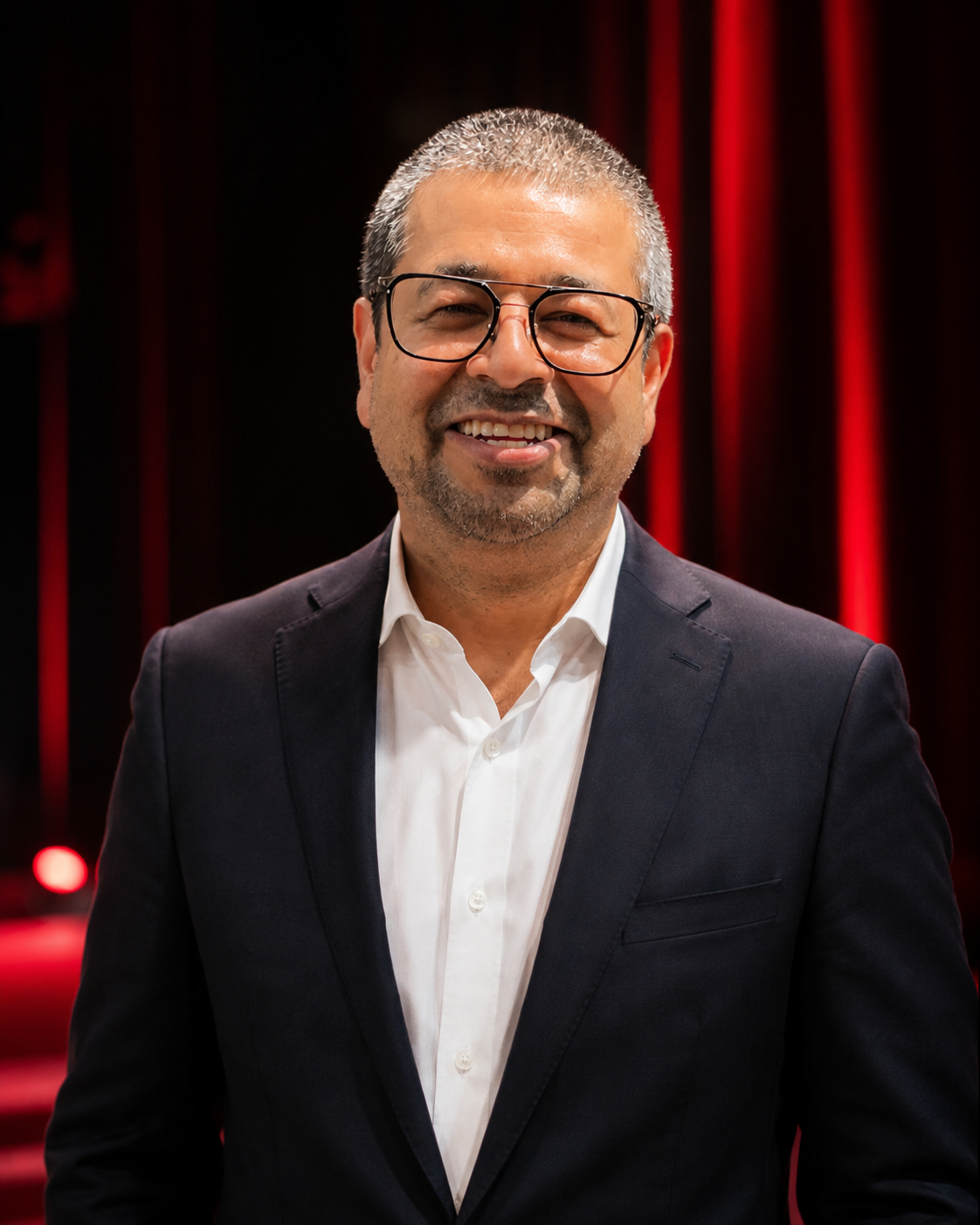
Human By Design is an AI podcast hosted by Dr. Arjun Jain, founder and chief scientist of Fast Code AI, an AI research and engineering company. It covers AI research and the work of building AI systems, with a focus on how established companies move models into production.
The first episode is Jain explaining how to build a foundation model. Later episodes include Jürgen Schmidhuber, whose work underpins modern sequence models, and Simon Jagers of Samotics, an industrial monitoring company, on why data quality outranks algorithm choice.
Episodes run long, between one and two hours, apart from one short entry.
Disclosure: Human By Design is produced by Unnati, the studio that publishes this blog.
Dr. Jain holds a PhD in computer graphics from the Max Planck Institute for Informatics, did postdoctoral research at NYU’s Courant Institute, and was a research scientist at Apple before founding Fast Code AI.
How to check if a podcast is active

Check the date of the most recent episode in the AI podcast’s RSS feed or on Apple Podcasts. Many shows that ranked well in 2024 stopped releasing episodes without announcing it.
Four checks separate a live show from an abandoned one:
- Latest episode date. Anything older than 90 days signals a pause or an end.
- Gap pattern. Compare the last six episode dates. Widening gaps come before a stop.
- Feed versus platform. Apple and Spotify listings can lag the RSS feed by days.
- Season structure. Some shows publish in seasons. Google DeepMind: The Podcast, hosted by Hannah Fry, runs this way, so a multi-month gap is normal rather than terminal.
Why do company podcasts fail?

Company podcasts fail on three production choices: a broad audience, a schedule the host cannot hold, and guests the host cannot question hard.
Guest selection does most of the work. Dwarkesh Patel prepares to the point where researchers answer questions they do not get elsewhere, and that preparation, not the audio quality, carries the length.
Cadence separates the durable shows from the abandoned ones. The AI Daily Brief and Everyday AI both publish daily, on a schedule the audience can rely on. A company podcast that stops after a handful of episodes has built nothing.
Narrow beats broad. Latent Space addresses AI engineers and nobody else. A show aimed at everyone in technology competes with Hard Fork and loses.
Frequently asked questions
What is the best AI podcast for beginners?
Are any AI podcasts hosted by AI researchers?
How long are AI podcast episodes?
How many downloads does a podcast episode get?
AI news podcast vs AI interview podcast: what is the difference?
Should a company start an AI podcast?
Sources (15)
- Human By Design RSS feed: episode titles, durations, host name and show description.
- Apple Podcasts lookup API: hosts and show identification for Dwarkesh Podcast, Latent Space, No Priors, The TWIML AI Podcast and Hard Fork.
- Apple Podcasts search API: hosts and show identification for The Cognitive Revolution, The AI Daily Brief, Machine Learning Street Talk, The Artificial Intelligence Show, Eye on A.I., Practical AI, Training Data, Unsupervised Learning, How I AI, Everyday AI, Me Myself and AI, AI + a16z and Google DeepMind: The Podcast.
- Dwarkesh Podcast, Apple Podcasts: episode titles, guests and durations including the Ryan Greenblatt and Adam Brown episodes.
- Latent Space: The AI Engineer Podcast, Apple Podcasts: episode titles, guests and durations, show description.
- No Priors, Apple Podcasts: host identification and guests including Chess.com, DoorDash and Booking.com.
- The TWIML AI Podcast, Apple Podcasts: host and publication gaps.
- Hard Fork, Apple Podcasts: hosts and publisher.
- Last Week in AI RSS feed: host names.
- Everyday AI RSS feed: host name and publishing cadence.
- About, Machine Learning Street Talk: Tim Scarfe’s PhD and background.
- About, The Cognitive Revolution: Nathan Labenz’s role at Waymark and the show’s format.
- Claire is the host of How I AI, ChatPRD: Claire Vo’s role at ChatPRD and the show’s episode format.
- Team, Fast Code AI: Dr. Arjun Jain’s PhD, postdoctoral research, Apple role and company position.
- Global podcast statistics, Buzzsprout: median downloads in the first seven days and the top 25% and top 10% thresholds.